
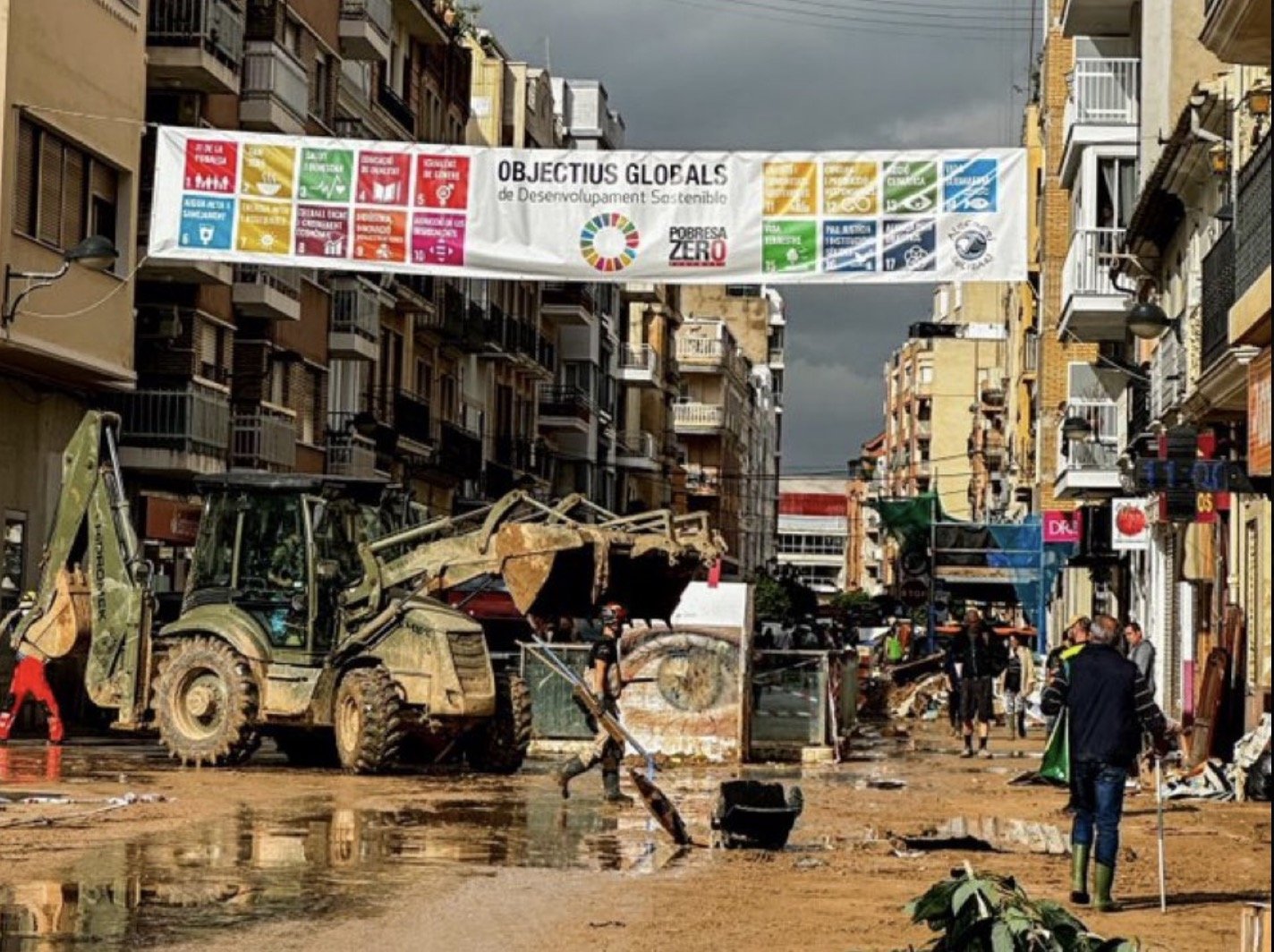
“There are many people interested in there being chaos.” These words from King Felipe VI, directed at a resident of Paiporta during his visit to those affected by the Dana of Valencia, make us reflect on the dark interests behind the tragedy. In this article, we will gather the versions and theories about the chaos that ravaged the region, inviting each one to draw their own conclusions.
It is devastating what is happening. As a Valencian, I feel the need to share my experience. In this account, I will talk about famous figures and victims who, in search of popularity, traveled to ground zero, promising help and support, but with intentions beyond what they seem. Throughout this article, we will explore the “dark dimension,” as defined by Iker Jiménez in Horizonte. And analyze the manipulations and disinformation we have faced. Remember to verify all information before drawing conclusions.
Preparations Before the Catastrophe
Before addressing the events of the tragic day of the Dana of Valencia, it is important to mention some key background information. Earlier this year, the World Economic Forum declared disinformation as humanity’s number one enemy, even above war. This was followed by a plan to combat fake news. Two weeks before the Dana, insurance was signed to cover possible negligence related to the Confederación Hidrográfica del Júcar, the entity responsible for the Forata dam, which was involved in the disaster. Furthermore, news emerged that the radar in Valencia was not working correctly, a critical failure for citizen safety.

What Happened on October 29th? The Day of the Dana of Valencia
On October 29th, both national and international weather services had already predicted the magnitude of the rains, and a red alert was issued in several parts of Spain. In fact, National Security had a meeting with the government to coordinate actions. However, instead of activating the state of emergency, bureaucracy delayed the response. The lack of preparation and quick action contributed to the chaos that followed.
It is important to clarify that we cannot claim that the Dana was intentionally provoked, but there are theories about it that we must mention. The devastation was caused by torrential rains and the opening of the Forata dam, which, when it overflowed, caused a tsunami that flooded several municipalities. This phenomenon, more than the rain itself, was what caused the total collapse of the area.
In an emergency meeting, a document with instructions on managing the crisis was leaked. Among the disturbing phrases were: “This is our moment“, “Climate dogmatism” and “No anxiety, we have a plan.” This information made it clear that, at that moment of emergency, the priority was not to save lives but to implement policies that would benefit certain international agendas.

The Disaster: Flooding and Abandonment
The catastrophe began when the rivers overflowed, creating a wave of water that swept entire municipalities. This was followed by the tsunami caused by the opening of the Forata dam, which overflowed without any prior alert. The chaos was absolute. While half a million people suffered, videos were shown of people desperately asking for help. Instead of receiving assistance, the response was delayed and disorganized.
Despite the critical situation, help took time to arrive. The first to act were volunteers, but many of them were restricted by the authorities who did not allow them to deliver aid on time. The help from the population was even confiscated, which increased the chaos. Despite the difficulties, figures like Iker Jiménez became heroes, alerting society and mobilizing resources for the victims.
Interests Behind the Chaos of the Dana of Valencia
As the situation worsened, severe tensions were created. Volunteers from various ideologies grouped together to help, but their efforts were blocked by official intervention. The response from the authorities was contradictory, and many times, instead of helping, access to assistance was blocked. Resources sent by citizens with good intentions were burned. And volunteers who tried to help were sidelined.
What started as an act of solidarity quickly turned into a struggle between those who wanted to help and those who, for unknown reasons, tried to block that help. This is just one of the many dark points that forces us to question what interests are really at play in crisis situations.
In such a tragic moment, disorganization, political interests, and a lack of empathy made the response insufficient. Are we witnessing mass manipulation, or is it simply a system incapable of managing large-scale emergencies? In any case, the victims remain the people who lived through this nightmare.
